Washington Without a Speaker: How Mike Johnson’s Leadership Crisis Exposed a House in Free Fall
It began, as so many political breakdowns do, with a procedural maneuver that few voters could name and almost everyone could feel. A discharge petition — an obscure legislative tool designed for moments of desperation — suddenly became the most powerful force in the U.S. House of Representatives. For Speaker Mike Johnson, it was the clearest signal yet that control of the chamber had slipped from his hands.

In recent days, lawmakers from both parties have openly questioned whether Johnson is still functioning as Speaker in anything but title. Members are bypassing leadership, signing petitions to force votes, and publicly criticizing a process that appears paralyzed. What was once described as a narrow majority has hardened into something more corrosive: a chamber operating without trust, direction, or a central authority.
Johnson’s predicament is partly structural. With a razor-thin majority, any Speaker would struggle to keep a fractious conference aligned. But the current crisis is not simply about arithmetic. It is about power — who wields it, who has surrendered it, and who is now paying the price.
At the center of the conflict is health care, specifically the looming expiration of enhanced Affordable Care Act subsidies that affect tens of millions of Americans. A bipartisan group of lawmakers has pushed for a temporary extension, warning that inaction will result in sharp premium increases for families already strained by inflation. Yet despite multiple compromise proposals and clear majority support for some form of action, the House has failed to vote.
The result has been unprecedented. Lawmakers have turned to discharge petitions to force legislation onto the floor, effectively going around their own Speaker. Parliamentary historians struggle to find a modern parallel: multiple successful petitions, on multiple issues, against the wishes of House leadership. In Washington, procedure often signals deeper realities. This one suggests rebellion.
Johnson’s critics argue that the Speaker has chosen loyalty over leadership — deferring to President Donald Trump while sidelining Congress itself. Rather than asserting the institutional power of the House, they say, Johnson has allowed executive action to replace legislation, even on matters that clearly require congressional authority. Tariffs, health care, budget decisions — all have increasingly flowed from the White House, leaving lawmakers as spectators.
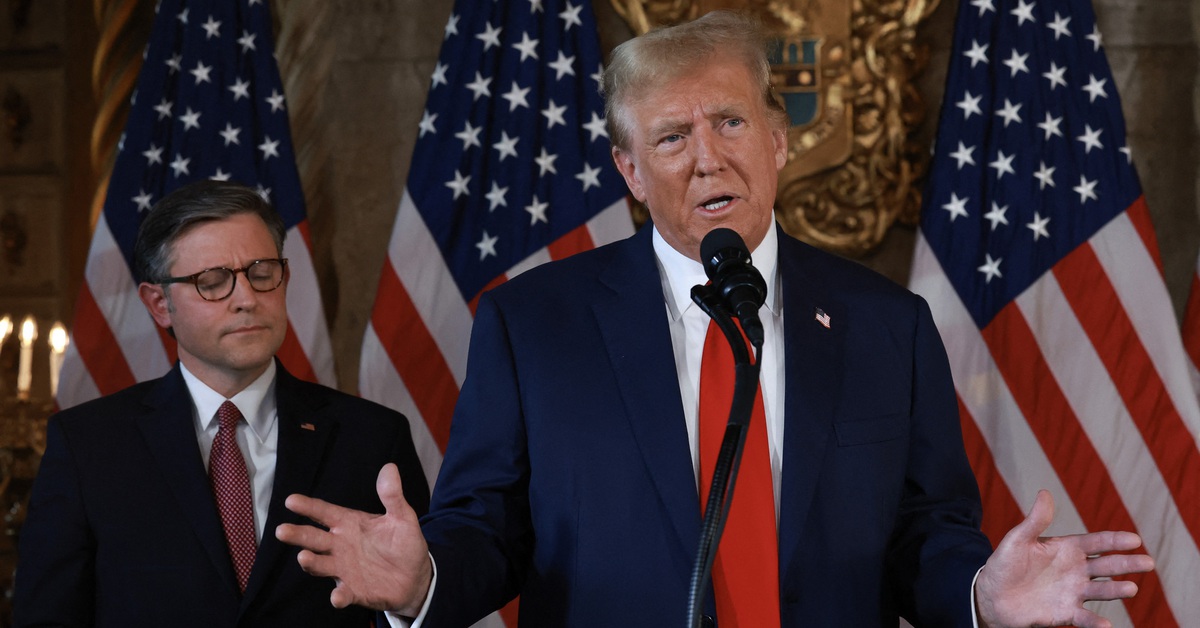
The contrast with past Speakers is striking. Even in periods of intense partisanship, figures like Nancy Pelosi guarded the prerogatives of the House jealously, regardless of who occupied the Oval Office. She clashed openly with presidents of both parties when congressional power was at stake. Johnson, by contrast, is accused by critics of yielding preemptively — avoiding confrontation even when it means legislative paralysis.
That strategy has consequences. Inside the Republican conference, frustration is turning into fatigue. According to several accounts, dozens of GOP lawmakers are quietly weighing retirement rather than face another cycle defending chaos at home. Others fear primary challenges if they break with Trump, even as they privately concede that defending the status quo is politically untenable.
Democrats, meanwhile, see opportunity. Since the last election, they have quietly outperformed expectations in hundreds of local races and ballot measures, campaigning on affordability, health care, and cost of living — precisely the issues stalled in Congress. While party leaders lack a single national figurehead, they argue that decentralized, community-based leadership has proven more effective than personality-driven politics.
The irony is that Johnson’s weakness has not unified Republicans against Democrats, but fragmented them internally. Some members want to govern. Others want confrontation. Still others simply want out. The Speaker, caught between factions and beholden to a president who thrives on disorder, appears unable — or unwilling — to impose discipline.
Even sympathetic observers acknowledge the difficulty of the job. Johnson did not inherit an easy hand. But he asked for it. And in Washington, power unused is power lost. By canceling weeks of session, avoiding tough votes, and allowing crises to fester, the Speaker has created a vacuum — one that rank-and-file members are now filling themselves.
Whether Johnson survives politically is almost beside the point. The more pressing question is what his tenure reveals about the House itself. When lawmakers no longer believe leadership will act, they resort to extraordinary measures. When those measures become routine, dysfunction becomes normalized.
As the 2026 midterms approach, the consequences of inaction are growing harder to ignore. Health care costs are rising. Voters are watching. And a House without a functioning Speaker is not merely a partisan problem — it is an institutional one.
For now, the gavel still rests in Mike Johnson’s hand. But in practice, the House is speaking for itself.

Leave a Reply