Category: Uncategorized

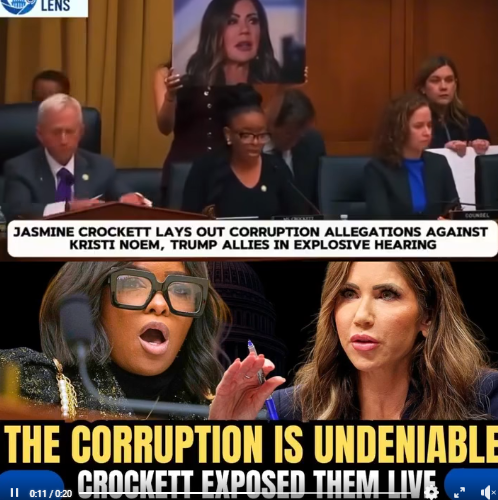
  • Jasmine Crockett Lays Out Corruption Allegations Against Kristi Noem, In Explosive Hearing

    A tense and closely watched congressional hearing erupted into a political flashpoint after Jasmine Crockett presented a series of corruption allegations against Kristi Noem, igniting sharp exchanges and immediate national attention.

    The hearing, held on Capitol Hill, quickly moved beyond routine oversight as Crockett outlined claims she said raise serious questions about ethics, transparency, and the use of public authority. While no formal findings have yet been issued, the allegations alone were enough to trigger intense reactions across Washington.


    Allegations Presented on the Record

    During her remarks, Crockett accused Noem of actions that she argued may constitute abuse of power and conflicts of interest. Speaking deliberately and forcefully, Crockett emphasized that the allegations were based on documented concerns and deserved thorough investigation.

    “This is not about politics,” Crockett said during the hearing. “This is about accountability and the public’s right to know whether those entrusted with power are using it lawfully and ethically.”

    Details discussed included decision-making processes, relationships with private interests, and whether official actions aligned with legal and ethical standards. Crockett stopped short of declaring guilt but pressed for full transparency and oversight.


    Noem and Allies Push Back

    Supporters of Kristi Noem swiftly rejected the allegations, calling them politically motivated and unsupported by verified findings. Allies argued that policy disagreements were being reframed as corruption claims and warned against drawing conclusions before investigations are completed.

    As of now, Noem has not been formally charged with any wrongdoing, and no enforcement agency has announced confirmed violations.


    A Broader Accountability Debate

    The hearing underscored growing tensions over ethics and oversight in American politics. Lawmakers from both parties acknowledged that while allegations must be taken seriously, they must also be tested through proper investigative and legal channels.

    Ethics experts note that congressional hearings often serve as a first step—bringing issues into public view before independent authorities determine whether further action is warranted.


    Political and Public Reaction

    Clips from the hearing spread rapidly across social media, fueling polarized reactions. Supporters praised Crockett for what they described as fearless questioning, while critics accused her of staging a political ambush.

    The moment reflects a larger reality in modern governance: hearings themselves can shape public perception long before facts are fully established.


    What Comes Next

    Attention now turns to whether ethics committees, inspectors general, or law enforcement bodies will pursue formal reviews of the claims raised during the hearing. Until then, the allegations remain unproven, and all parties involved retain the presumption of innocence.

    Still, the explosive nature of the exchange ensured one outcome is already certain—the hearing has intensified calls for transparency and accountability, and it has placed Kristi Noem under a brighter national spotlight.

    As investigations and responses unfold, Washington—and the public—will be watching closely to see whether the accusations lead to concrete findings or fade into the growing archive of political confrontations.
  • Late-Night Claims Ignite a Political Firestorm as Rep. Jasmine Crockett Alleges Overnight Threats, Triggers Network Cut-In, and Forces Urgent Questions About Verification, Accountability, and the Power of Viral Narratives

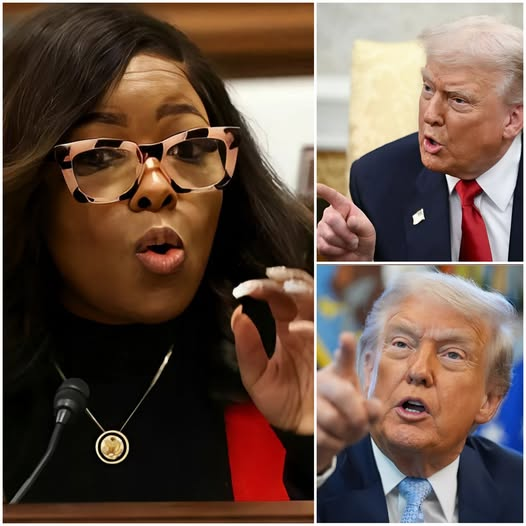
    A sudden late-night development sent shockwaves through political and media circles after Jasmine Crockett publicly alleged that she received overnight threats, triggering an unexpected network cut-in and igniting a fast-moving national debate about verification, accountability, and the power of viral political narratives.

    The claims, made during an unscheduled media appearance, spread rapidly across social platforms, drawing intense attention before key details could be independently confirmed. Within minutes, the story dominated political discourse, underscoring how modern news cycles can accelerate unverified information into headline status.


    A Network Cut-In and Immediate Fallout

    According to broadcasters, regular programming was interrupted to carry Crockett’s remarks, a move typically reserved for breaking developments involving public safety or national significance. The urgency of the cut-in amplified the seriousness of the allegations and propelled them into the national spotlight.

    Viewers were left with pressing questions: What exactly occurred overnight? Who issued the alleged threats? And what evidence exists to support the claims?

    While Crockett emphasized concern for personal safety and the broader climate of political hostility, she also acknowledged that investigations were still in early stages.


    Verification in the Age of Instant News

    Media analysts say the episode highlights a growing challenge for journalism: balancing the need to report urgent claims from public officials with the responsibility to verify facts before amplification.

    In an era where viral clips can shape public opinion within minutes, even preliminary statements can harden into perceived truth. Experts warn that this dynamic places extraordinary pressure on news organizations to clearly distinguish allegations from confirmed findings.


    Accountability and Institutional Response

    Following the broadcast, calls emerged for law enforcement clarification and official briefings. Some lawmakers urged caution, emphasizing due process and the importance of evidence-based conclusions. Others argued that threats against elected officials—real or alleged—must be treated seriously given rising political tensions nationwide.

    So far, authorities have not released detailed public findings, reinforcing the need for careful reporting as the situation develops.


    The Power—and Risk—of Viral Narratives

    The rapid spread of Crockett’s claims illustrates how political narratives can take on a life of their own. Supporters framed the incident as evidence of escalating intimidation in American politics, while critics questioned the speed at which the story was elevated without independent confirmation.

    Communication scholars note that once a narrative goes viral, subsequent clarifications often struggle to regain equal attention—regardless of their accuracy.


    What Happens Next

    As investigations continue, attention is shifting toward official statements, verified timelines, and documented evidence. Media organizations are reassessing how the story was presented, and lawmakers are calling for clearer standards when urgent claims intersect with public safety and political impact.

    Whether the allegations are substantiated or not, the episode has already sparked a broader conversation about trust, transparency, and responsibility in the digital news era.

    One thing is clear: late-night claims, when amplified instantly, can reshape national discourse—forcing urgent questions not just about what happened, but how information itself now moves through the political bloodstream.

  • BREAKING: Panic GRIPS Capitol Hill amid release of Trump-linked call records tied to January 6

    Panic gripped Capitol Hill as newly released call records tied to Donald Trump and the events of January 6 sent shockwaves through Washington, reopening wounds many lawmakers believed had finally begun to scar over.

    The disclosure has reignited fears, revived old accusations, and triggered a flurry of behind-the-scenes damage control as officials scramble to understand what the records reveal and how far the fallout could reach.

    According to sources familiar with the release, the call logs paint a troubling picture of frantic communications in the hours before and during the attack on the U.S. Capitol.

    While the records themselves do not include audio, the timing, frequency, and recipients of the calls have raised fresh questions about who knew what, and when.

    On Capitol Hill, even seasoned lawmakers appeared rattled, with some privately admitting that the release threatens to upend carefully maintained narratives surrounding that day.

    BREAKING: Panic GRIPS Capitol Hill amid release of Trump-linked call records tied to January 6

    The mood inside Congress reportedly shifted almost instantly. Staffers described a sudden sense of unease, with offices buzzing as legal teams, communications directors, and senior aides urgently reviewed the names and timestamps appearing in the records.

    For many, the concern is not just political embarrassment, but legal exposure. Any suggestion that members of Congress, political operatives, or close allies of Trump were in contact during critical moments of the insurrection could carry serious consequences.

    Trump’s allies have moved quickly to downplay the significance of the call records, insisting that phone activity alone proves nothing and accusing opponents of reviving January 6 for political gain.

    They argue that in moments of national crisis, calls are expected, and that interpreting intent from call logs is a dangerous and misleading exercise. Still, even some Republicans are said to be uneasy, privately acknowledging that the optics are difficult and the timing could not be worse.

    Democrats, meanwhile, see the release as validation of long-held concerns that the full truth about January 6 has yet to emerge. Several lawmakers have suggested the records reinforce the need for continued investigation, arguing that accountability cannot be selective or incomplete.

    Behind closed doors, there is renewed discussion about whether previous probes stopped short of examining key figures or connections that now appear impossible to ignore.
    What has truly fueled panic is the uncertainty.

    The call records are reportedly only a portion of what may eventually become public, leaving officials bracing for additional disclosures. In Washington, uncertainty is often more destabilizing than bad news itself.

    The fear is not just about what has been revealed, but about what might come next, and who might be implicated as more details surface.

    Legal experts watching the situation say the records could become a critical piece of a larger puzzle. While call logs alone do not establish guilt, they can help investigators reconstruct timelines and identify coordination patterns.

    If paired with testimony, text messages, or other evidence, they could significantly strengthen cases already in motion or open the door to new inquiries entirely.

    For Trump, the development adds another layer to an already turbulent political landscape.

    As he continues to dominate headlines and rally supporters, the shadow of January 6 remains stubbornly present. Each new revelation threatens to drag the events of that day back into the center of public debate, complicating efforts to shift focus to other issues.

    His critics argue this is precisely why transparency matters, while his supporters see it as proof that the past is being weaponized to undermine him.
    On Capitol Hill, the immediate response has been a mix of public silence and private alarm. Few lawmakers are eager to speak on the record, and those who do are choosing their words carefully.

    The sense that something once buried is resurfacing has created an atmosphere of suspicion, with officials wondering not just what the public will learn, but what their colleagues may already know.
    As Washington waits for clarity, one thing is certain: the release of Trump-linked call records tied to January 6 has shattered any illusion that the chapter is closed.

    Instead, it has reopened a national reckoning, reigniting debates over responsibility, accountability, and the fragility of American democracy.

    Whether this moment leads to concrete consequences or simply deepens existing divisions remains to be seen, but for now, panic on Capitol Hill is real, and the aftershocks are only beginning.

  • 60 Minutes Ago: BREAKING — Supreme Court Statement Shakes Washington Over Trump’s Venezuela Actions

    Washington was jolted less than an hour ago after the Supreme Court of the United States, through its rarely heard-from Public Information Office, issued an extraordinary public statement now reverberating across the political and legal landscape.

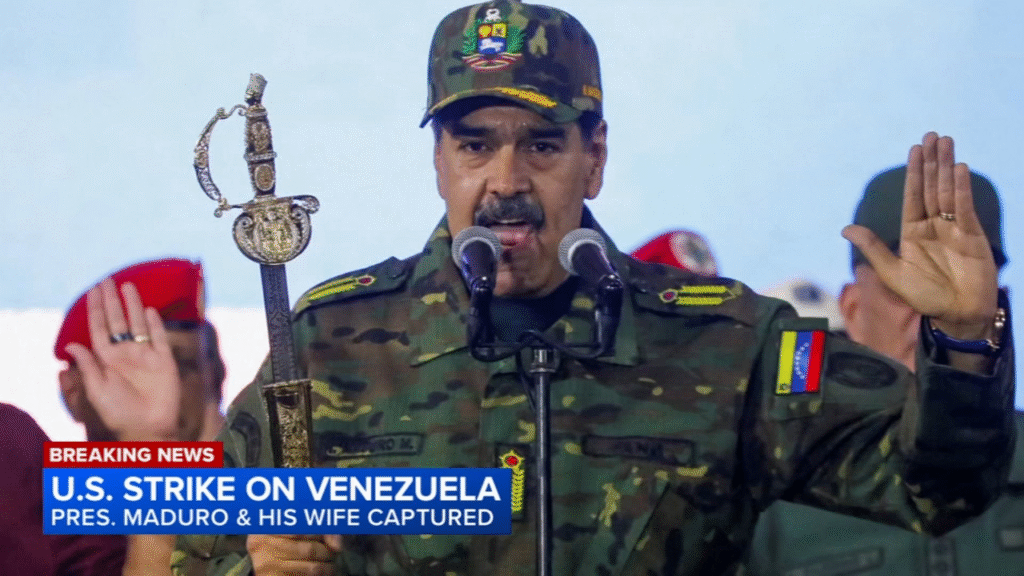
    According to the statement, military actions ordered by former President Donald Trump in Venezuela—including the arrest of Venezuelan leader Nicolás Maduro—were carried out without congressional authorization, placing them in direct conflict with the U.S. Constitution and federal law.


    Constitutional Lines Allegedly Crossed

    The Court’s statement cites Article I, Section 8 of the U.S. Constitution, which grants United States Congress the sole authority to declare war, as well as the War Powers Resolution, designed to limit unilateral military action by the executive branch.

    Legal experts say the language used by the Court is unusually direct and signals deep concern over the scope of presidential power exercised without legislative consent.

    “This is not procedural criticism,” said one constitutional scholar. “This is a statement that goes to the heart of separation of powers.”


    Labeled “Illegal and Impeachable”

    Sources familiar with internal discussions say the actions described in the statement are now being characterized as illegal and potentially impeachable, a term rarely invoked in connection with Supreme Court communications.

    While the Court itself does not initiate impeachment proceedings, its interpretation of constitutional violations could carry immense weight as lawmakers consider next steps.

    Within minutes of the statement’s release, senior members of Congress reportedly began discussing a swift investigative response, focusing on decision-making authority, command orders, and the legal justification—if any—used to bypass congressional approval.


    A Rare Move by the Court

    Historically, the Supreme Court avoids public commentary outside formal opinions. The decision to issue a public statement via its information office underscores the gravity of the situation and the potential constitutional crisis implied by the allegations.

    Former court officials describe the move as “extraordinary,” noting that it suggests urgency and concern about public understanding of constitutional boundaries.


    Political Shockwaves Across Washington

    Reaction in Washington has been immediate and intense. Lawmakers from both parties are calling for briefings, document preservation, and testimony from defense and intelligence officials. Political analysts say the statement could redefine ongoing debates over executive power, military authority, and accountability at the highest levels of government.

    Trump allies are expected to challenge the characterization aggressively, arguing that national security concerns justified decisive action. Critics, however, say the Supreme Court’s statement undercuts that defense by emphasizing the absence of congressional consent.


    What Happens Next?

    Attention is now turning to investigative committees, potential court challenges, and the broader constitutional implications. If formal inquiries confirm the Court’s concerns, the episode could become one of the most consequential clashes between branches of government in modern U.S. history.

    For now, one fact is undeniable: a rare Supreme Court statement has shaken Washington, reopened the debate over war powers, and placed presidential authority under an intense constitutional spotlight.

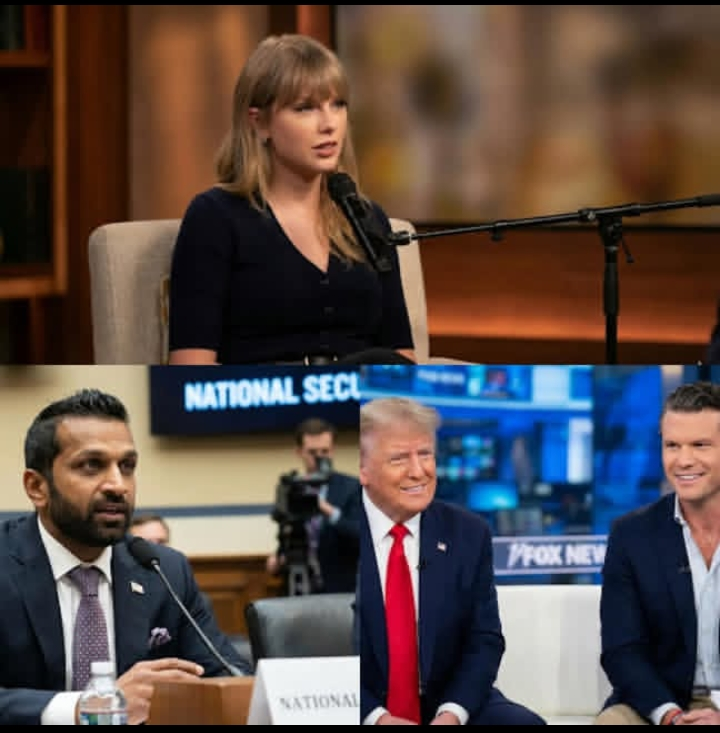
  • JUST IN: Taylor Swift Urges Immediate Impeachment of Donald Trump after Attacking Venezuela and ‘Kidnapping’ President Maduro, Demands Removal of Pete Hegseth for War Crimes and Kash Patel Over Epstein File Destruction, Warns Public of Alleged Plans Targeting Mexico, Greenland, and Cuba ‎ ‎ This is moving fast — and parts of it may be erased. ‎Click now to see what Taylor Swift allegedly revealed, the impeachment push forming behind the scenes, and the countries now being named as next targets

    JUST IN: Taylor Swift’s Name Thrust Into Explosive Impeachment Storm as Allegations Swirl Around Trump’s Venezuela Strike, Maduro “Abduction,” and Wider Global Escalation
    In a rapidly unfolding controversy that has set social media ablaze and sent shockwaves through political circles, global pop icon Taylor Swift has been pulled into what supporters are calling an unprecedented moral stand—and critics are calling a dangerous escalation—amid allegations surrounding Donald Trump’s reported military action in Venezuela.
    According to claims spreading online and in activist networks, Swift has allegedly urged immediate impeachment proceedings against former President Donald Trump following reports of a U.S. strike on Venezuelan territory and the alleged forced removal of Venezuelan President Nicolás Maduro from his country. While no official confirmation has been issued by Swift or her representatives, the claims have ignited a firestorm, fueled by the sheer scale of the accusations and the high-profile names involved.

    A Perfect Storm of Allegations
    At the center of the controversy are three explosive claims:
    That Trump authorized or directed a unilateral military action against Venezuela without congressional approval.
    That Maduro was forcibly detained or “kidnapped” following that action.
    That senior U.S. officials may have been involved in broader misconduct, including alleged war crimes and the destruction of sensitive files.
    The allegations, while unverified, have been framed by critics as a potential constitutional crisis—one that could dwarf previous impeachment battles if substantiated.

    Taylor Swift’s Alleged Intervention
    What has transformed this story from another geopolitical dispute into a cultural earthquake is the alleged involvement of Taylor Swift. Online posts claim Swift privately—and later publicly—expressed outrage over the situation, framing it as a betrayal of democratic norms, international law, and humanitarian principles.
    Swift, who has increasingly spoken out on political and social issues over the past decade, has previously criticized authoritarianism, political violence, and abuses of power. Supporters argue that her alleged call for impeachment would be consistent with her past activism. Skeptics, however, note that no verified statement has yet been released, raising questions about how her name became attached to the story in the first place.

    Regardless, the reaction has been immediate. Hashtags combining Swift’s name with “impeachment” and “Venezuela” have trended across multiple platforms, with millions debating whether celebrities should influence matters of war and statecraft—or whether silence itself would be a moral failure.
    Calls for Accountability: Hegseth and Patel Named
    Beyond Trump, the allegations extend to other powerful figures. Claims circulating online accuse Pete Hegseth of involvement in actions that critics label potential war crimes, though no formal charges or legal findings have been announced. Similarly, Kash Patel has been accused in online discourse of involvement in the alleged destruction or mishandling of files related to the Jeffrey Epstein case—an accusation that remains unproven but deeply inflammatory given the public sensitivity around Epstein.
    Legal analysts caution that allegations alone do not constitute evidence. However, they also acknowledge that the mere suggestion of file destruction tied to Epstein is enough to provoke widespread public outrage and renewed calls for transparency.
    Warnings of Wider Global Targets
    Perhaps the most alarming aspect of the claims is the assertion that Venezuela is only the beginning. According to posts attributed to activist circles—and allegedly echoed by Swift in private communications—there are fears of future actions targeting Mexico, Greenland, and Cuba.

    No government agency has confirmed such plans. Still, critics argue that recent geopolitical rhetoric and military posturing make the fears plausible enough to warrant public scrutiny. The suggestion of Greenland—previously floated during Trump’s presidency as a potential acquisition—has reignited memories of statements once dismissed as jokes but now viewed by some as warning signs.
    Political Fallout and Public Reaction
    Lawmakers have not officially referenced Taylor Swift in any impeachment discussions, but activists claim her alleged stance has energized younger voters and intensified pressure on Congress. Progressive groups argue that if any part of these allegations proves true, impeachment would not be political theater—but a constitutional necessity.
    Conservative commentators, meanwhile, dismiss the entire narrative as misinformation amplified by celebrity culture and social media hysteria. They warn that repeating unverified claims risks inflaming international tensions and undermining public trust.

    Why This Story Won’t Go Away
    Even without confirmation, this controversy highlights a deeper issue: the erosion of trust. Trust in institutions. Trust in media. Trust in leadership. When allegations this severe gain traction, it reflects a public already primed to believe the worst—and desperate for accountability.
    Whether Taylor Swift actually made these demands or whether her name has been leveraged to amplify outrage remains an open question. What is clear is that the story has tapped into raw nerves about power, secrecy, and the use of force in a fragile world.

    What Happens Next
    As of now, no official impeachment filing tied to these claims has been introduced, and no independent investigation has confirmed the more extreme allegations. But pressure is mounting. Advocacy groups are demanding clarity. Lawmakers are being forced to respond. And the public is watching closely.
    In an era where perception can move faster than proof, the coming days will be critical. Either the claims collapse under scrutiny—or they trigger one of the most consequential political reckonings in modern American history.
    One thing is certain: this story is far from over.

  • HOT UNDATED    Impeachment Discussions Intensify in Capitol Hill as Lawmakers Accuse Donald Trump of Unlawful Use of Military Force and Detention of a Foreign Leader of a sovereign nation Without Congressional Consent after Military Action in Venezuela and capture of Maduro ‎ ‎ THIS COULD END A PRESIDENCY. Lawmakers say Trump crossed a constitutional red line — and impeachment talks are exploding behind closed doors. What REALLY happened in Venezuela is far worse than reported. Click before this gets buried. ‎

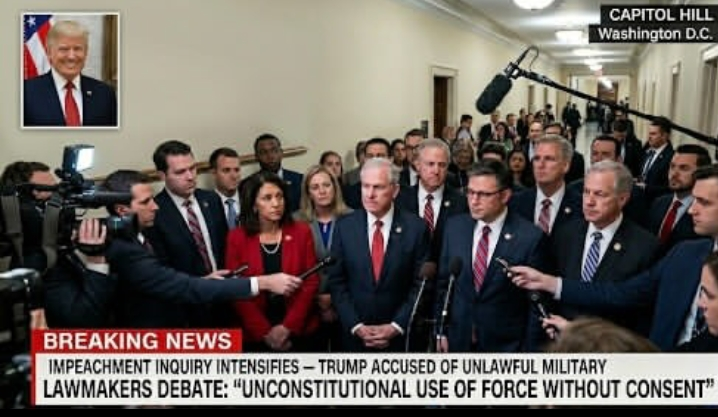
    Impeachment Discussions Intensify on Capitol Hill as Lawmakers Accuse Trump of Unlawful Military Action in Venezuela
    Washington, D.C. — A rapidly escalating political firestorm is engulfing Capitol Hill as impeachment discussions intensify following reports and allegations surrounding former President Donald Trump’s recent military actions involving Venezuela. Lawmakers from multiple committees are now openly questioning whether the operation — which reportedly involved the use of U.S. military force and the detention of a foreign head of state — violated the U.S. Constitution, federal war powers laws, and long-standing international norms.

    While details remain contested and politically charged, the controversy has reignited one of the most explosive constitutional debates in American governance: Can a U.S. president lawfully use military force against a sovereign nation — and detain its leader — without explicit authorization from Congress?
    A Controversial Operation Sparks Alarm
    According to multiple reports circulating among lawmakers and national security observers, U.S. military assets were allegedly involved in an operation connected to Venezuela that resulted in the capture or detention of President Nicolás Maduro following a military action. Critics say the operation occurred without prior congressional authorization, raising immediate concerns under Article I, Section 8 of the U.S. Constitution, which grants Congress the sole authority to declare war.

    The White House and Trump allies have not publicly confirmed the full scope of the operation, but the lack of transparency has only intensified scrutiny. Several lawmakers say they were blindsided, learning of the alleged events through intelligence briefings or media reports rather than formal congressional notification.
    “This is exactly the scenario the Constitution was designed to prevent,” one Democratic lawmaker said privately. “Unilateral military action against a sovereign nation without Congress is not a gray area. It’s a red line.”
    War Powers Act Back in the Spotlight
    At the center of the controversy is the War Powers Resolution of 1973, which requires the president to notify Congress within 48 hours of introducing U.S. forces into hostilities and limits military engagement without authorization to 60 days

    .
    Legal analysts note that if U.S. forces were used in Venezuela without proper notification or approval, the action could represent a direct violation of federal law.
    “Presidents have pushed the limits of the War Powers Act before,” said one constitutional law professor, “but detaining a foreign leader after a military strike would be unprecedented in modern U.S. history without congressional consent.”

    Several lawmakers are now demanding documentation, operational timelines, legal justifications, and classified briefings to determine whether the administration complied with statutory requirements.
    Detention of a Foreign Leader: A Diplomatic Earthquake
    Beyond domestic law, the alleged detention of a sitting foreign president has triggered global concern. International law experts warn that such an act, if confirmed, could be interpreted as an act of war or an illegal regime-change operation — something U.S. officials have long claimed to oppose.

    “This isn’t just a policy disagreement,” said a former State Department official. “Detaining a foreign leader without an international mandate or declaration of war opens the door to massive diplomatic fallout.”
    Several foreign governments and international organizations are reportedly monitoring the situation closely, with some calling for clarification from U.S. authorities regarding the legal basis of the operation.

    Impeachment Talk Moves From Fringe to Formal
    What initially began as online outrage and activist speculation has now moved into formal political channels. Members of the House Judiciary Committee and the House Foreign Affairs Committee have acknowledged that impeachment discussions are underway, though no articles have yet been formally introduced.
    Sources familiar with internal deliberations say lawmakers are considering whether the alleged actions constitute:

    Abuse of power
    Violation of the War Powers Act
    Violation of Article I of the Constitution
    Conduct inconsistent with the president’s oath of office
    “This isn’t about partisanship,” one senior aide said. “If the facts support the allegations, Congress has a constitutional obligation to act.”
    Trump Allies Push Back Hard
    Trump supporters and allied commentators have dismissed the controversy as politically motivated, arguing that the president has broad authority as commander-in-chief and that national security considerations may justify secrecy.

    Some have compared the situation to past U.S. military actions conducted without formal declarations of war, pointing to operations under multiple administrations.
    However, critics argue that those comparisons fail to address the unique and explosive nature of the allegations — particularly the reported detention of a foreign head of state.
    “You can’t normalize this by pointing to airstrikes or covert ops,” one analyst noted. “This is an entirely different level of escalation.”
    A Nation Once Again at a Crossroads
    As investigations loom and demands for transparency grow louder, the situation has placed the country back into familiar but deeply uncomfortable territory: a potential impeachment battle centered on presidential power, executive overreach, and the rule of law.

    Public trust, already strained by years of political polarization, now faces another test. Lawmakers warn that how Congress responds — whether through investigation, accountability, or restraint — could set a precedent that shapes U.S. foreign policy and constitutional balance for decades.
    “This isn’t just about Trump,” said one constitutional scholar. “It’s about whether the limits on presidential power still mean anything.”
    What Happens Next
    In the coming days, Congress is expected to:

    Demand classified briefings from the Pentagon and intelligence agencies
    Request legal justifications for the military action
    Examine whether Congress was properly notified
    Debate whether impeachment inquiries should formally begin
    For now, one thing is clear: the political fallout is far from over. Whether the allegations lead to impeachment proceedings or dissolve into partisan deadlock, the controversy has already reopened a fundamental question at the heart of American democracy — who decides when the nation goes to war?
    And as lawmakers quietly prepare their next moves, the public is left waiting for answers that could reshape the political landscape overnight.

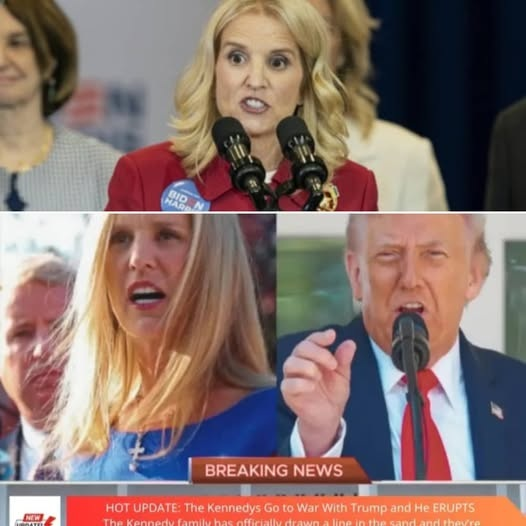
  • HOT UPDATE: The Kennedys Go to War With Trump and He ERUPTS The Kennedy family has officially drawn a line in the sand and they’re not backing down. After Kerry Kennedy vowed to rip Donald Trump’s name off the Kennedy Center “with a pickax,” a political explosion went off across America. Within hours, other prominent Kennedys stood beside her, publicly rejecting Trump, his legacy, and any association with their family’s historic name.

    HOT UPDATE: The Kennedys Go to War With Trump—and He Erupts

    The gloves are off. America’s most storied political dynasty has drawn a bold line in the sand, and former President Donald Trump is squarely on the other side of it.

    The latest political firestorm ignited after Kerry Kennedy, daughter of the late Robert F. Kennedy, delivered a blistering rebuke that stunned both Washington and the cultural world. Vowing to remove Trump’s name from the Kennedy Center, Kerry Kennedy declared she would do it “with a pickax” if necessary—a metaphor that instantly went viral and triggered a nationwide political explosion.

    A Dynasty Draws the Line

    Within hours of Kerry Kennedy’s remarks, other prominent members of the Kennedy family closed ranks behind her. Their message was unmistakable: Trump does not represent their values, their legacy, or the principles associated with the Kennedy name.

    For a family long synonymous with public service, civil rights, and democratic ideals, the rejection was not subtle. Multiple Kennedys publicly distanced themselves from Trump, signaling that any attempt to link his brand of politics with their historic lineage would be firmly and publicly resisted.

    Why the Kennedy Center Matters

    The Kennedy Center is more than a building—it is a national symbol of arts, culture, and civic unity. Named after President John F. Kennedy, it represents ideals of inspiration, creativity, and shared national purpose. Kerry Kennedy’s vow struck a nerve precisely because it framed Trump’s association with the institution as fundamentally incompatible with those ideals.

    To the Kennedys, this was not a partisan squabble; it was a fight over historical memory and moral ownership of a national landmark tied to their family’s legacy.

    Trump’s Furious Response

    Trump, never one to let an attack go unanswered, reportedly erupted in response. Allies rushed to his defense, accusing the Kennedys of elitism and political theatrics. Conservative commentators framed the backlash as proof that the “political establishment” was closing ranks against him once again.

    But critics argue the opposite: that this moment reflects a deeper fracture between Trumpism and the traditional pillars of American political culture—institutions, norms, and legacy families that once defined bipartisan respect.

    More Than a Family Feud

    This confrontation goes far beyond personal animosity. It represents a broader clash between two visions of America: one rooted in institutional tradition, civic responsibility, and moral symbolism, and another driven by disruption, personal branding, and political combat.

    By standing together, the Kennedys are making clear they see Trump not just as a political opponent, but as a threat to the values they believe their family name represents.

    A Cultural and Political Flashpoint

    Whether Trump’s name ultimately remains associated with the Kennedy Center or not, the damage is already done. The episode has reignited debates about who gets to define American legacy—and who has the authority to guard it.

    One thing is certain: the Kennedys are not backing down. And with one of the most famous families in U.S. history openly at war with a former president, this fight is no longer just political—it’s symbolic, cultural, and deeply personal.

    As the fallout continues, America is watching a rare spectacle unfold: a dynasty defending its name, and a political figure raging against it.

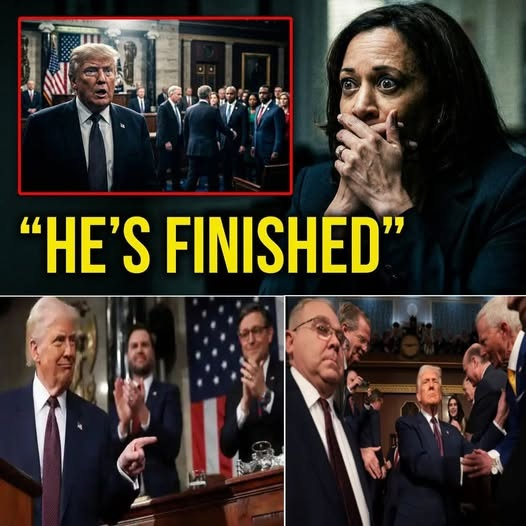
  • Trump FACES JAIL as GOP Turns — 50 Republicans Join Democrats to Convict Trump! Kamala Harris Tonight, I want to explain why the number 50 matters so much in this moment. In this hypothetical scenario, the U.S. Senate has crossed a historic line. Conviction requires a two-thirds majority—67 votes—and that threshold could only be reached if a large number of Republicans broke with their own president. Fifty of them did. What changed wasn’t politics…

    Trump Faces Jail as GOP Turns — 50 Republicans Join Democrats in Historic Conviction Scenario

    In a dramatic and unprecedented hypothetical moment, the United States Senate crosses a line no one once thought possible. Former President Donald Trump is convicted after 50 Republican senators break ranks and join Democrats—pushing the total past the ironclad two-thirds threshold of 67 votes required for conviction.

    Speaking to the nation, Kamala Harris zeroes in on why 50 matters.

    “Tonight, I want to explain why the number 50 matters so much in this moment,” Harris says. “What changed wasn’t politics.”

    Why 50 Changes Everything

    Impeachment convictions in the Senate are designed to be rare. The framers set the bar at two-thirds precisely to ensure that removal could never happen on partisan whims alone. In this scenario, Democrats cannot reach 67 by themselves. The only way forward is a mass defection—one large enough to signal that the evidence, not party loyalty, tipped the balance.

    Fifty Republicans voting to convict would mean something extraordinary occurred: a collective judgment that the conduct at issue crossed legal and constitutional red lines too stark to ignore.

    A Party Breaks with Its Leader

    For decades, party discipline has defined modern Washington. Yet here, members of the Republican Party choose institutional integrity over political survival. Harris frames the moment as a turning point—proof that allegiance to the Constitution can outweigh allegiance to a single figure.

    This isn’t about ideological disagreement or policy disputes. It’s about accountability. And the size of the defection matters because it signals consensus across factions that rarely agree on anything.

    From Conviction to Consequences

    Conviction in the Senate opens the door to real-world consequences. While impeachment itself does not impose prison time, it removes the political shield of office and clears a path for the justice system to act independently. In Harris’s telling, this is where the rule of law finally reasserts itself—without exemptions for power or popularity.

    The message is unmistakable: no one is above the law, and constitutional guardrails still function when pressure is highest.

    Not Politics—A Reckoning

    Harris insists this moment cannot be reduced to electoral strategy or partisan scorekeeping. “What changed wasn’t politics,” she emphasizes. What changed, she argues, was the weight of evidence, the clarity of facts, and the willingness of lawmakers to put country before party.

    Democrats, joined by a decisive bloc from the Democratic Party, present the vote as a moral reckoning—an affirmation that democratic systems can correct themselves, even when the stakes are enormous.

    A Line History Will Remember

    If such a moment were to occur, historians would likely mark it as one of the most consequential episodes in American governance: the day a deeply divided Senate found enough common ground to enforce constitutional accountability against a former president.

    In the end, the number 50 would stand not just for votes, but for a choice—a choice to defend institutions over individuals, and law over loyalty.

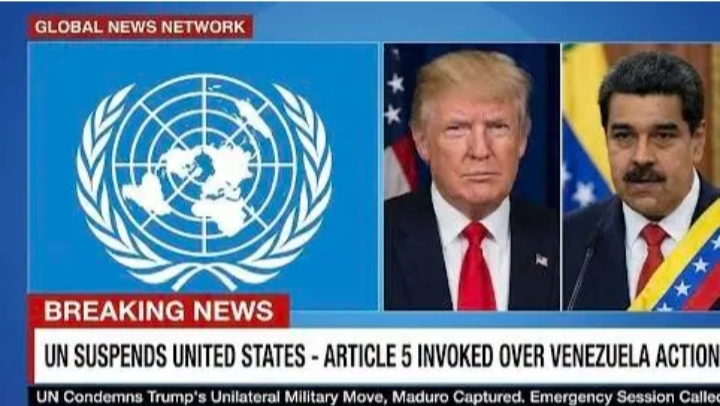
  • JUST IN: 40 mins AGO In an Unprecedented Decision, the United Nations Suspends the United States Under Article 5 After Condemning President Donald Trump’s Unilateral Military Action in Venezuela and the Capture of President Nicolás Maduro UN Makes Shock Move Against the U.S. After Venezuela Operation — What This Means for Global Power…Read Now watch what happens next..The story still unfolding 

    JUST IN: 40 mins AGO In an Unprecedented Decision, the United Nations Suspends the United States Under Article 5 After Condemning President Donald Trump’s Unilateral Military Action in Venezuela and the Capture of President Nicolás Maduro

    UN Makes Shock Move Against the U.S. After Venezuela Operation — What This Means for Global Power…Read Now watch what happens next..The story still unfolding 

    In an unprecedented and highly controversial move, the United Nations has announced the temporary suspension of the United States under Article 5, following strong condemnation of President Donald Trump’s alleged unilateral military operation in Venezuela and the reported capture of Venezuelan President Nicolás Maduro.

    According to senior UN officials, the emergency decision was reached after an overnight Security Council session marked by intense debate and sharp divisions among global powers. The UN Secretary-General described the action as a response to what was characterized as a “serious breach of international norms, state sovereignty, and multilateral decision-making.”

    The U.S.-led operation, reportedly conducted without international authorization, has sent shockwaves through diplomatic circles. While Washington has defended the action as necessary to protect regional stability and human rights, critics argue it sets a dangerous precedent and undermines the global rules-based order.

    Several nations, including long-time U.S. allies, expressed concern over the implications of suspending a founding UN member and the potential long-term impact on global governance. Russia and China welcomed the move, calling it a “clear message against unilateral military interventions.”

    As protests erupt across parts of Latin America and emergency diplomatic talks continue, analysts warn that the decision could dramatically reshape global power dynamics and weaken already strained international institutions.

    The situation remains fluid, with further statements expected from the White House and the UN in the coming hours. The world is watching closely as this extraordinary chapter in international relations continues to unfold.

  • JUST IN: Kamala Harris says: “This is not about drugs or democracy. It is about oil and Donald Trump’s desire to play the regional strongman. If he cared about either, he wouldn’t pardon a convicted drug trafficker or sideline Venezuela’s legitimate opposition while pursuing deals with Maduro’s cronies.”

    JUST IN: Kamala Harris Accuses Trump of Putting Oil Deals Above Democracy in Venezuela

    In a sharply worded statement that is already sending ripples through Washington, Kamala Harris accused former President Donald Trump of sacrificing democratic principles and the rule of law in pursuit of oil interests and personal power on the global stage.

    “This is not about drugs or democracy. It is about oil and Donald Trump’s desire to play the regional strongman,” Harris said.
    “If he cared about either, he wouldn’t pardon a convicted drug trafficker or sideline Venezuela’s legitimate opposition while pursuing deals with Maduro’s cronies.”

    Oil Over Principles?

    Harris’s remarks cut to the core of a long-running controversy surrounding U.S. policy toward Venezuela, a nation with some of the world’s largest proven oil reserves but also one of the most severe political and humanitarian crises in the Western Hemisphere.

    According to Harris, Trump’s actions reveal a consistent pattern: using foreign policy not to defend democracy or combat corruption, but to secure strategic advantages and bolster his image as a dominant power broker. She suggested that Venezuela’s vast oil wealth, rather than concern for democratic governance, has been the driving force behind these decisions.

    The Pardon Controversy

    Central to Harris’s criticism is Trump’s decision to pardon a convicted drug trafficker—an action she argues undermines claims that his Venezuela policy was rooted in fighting narcotics or corruption. Critics have long questioned how such pardons align with a tough-on-crime or anti-drug narrative, particularly when tied to foreign policy justifications.

    Harris framed the pardon as emblematic of a broader hypocrisy: publicly condemning authoritarianism and criminal networks while privately empowering or excusing them when it suits political or economic goals.

    Marginalizing the Opposition

    Harris also accused Trump of sidelining Venezuela’s legitimate democratic opposition while seeking arrangements with figures close to Nicolás Maduro. For years, the United States officially recognized opposition leaders as the rightful representatives of the Venezuelan people, condemning Maduro’s government as illegitimate and authoritarian.

    By suggesting Trump pursued deals with “Maduro’s cronies,” Harris implied that behind-the-scenes negotiations may have weakened the opposition’s leverage and credibility, effectively prolonging the very regime U.S. policy claimed to oppose.

    A Broader Political Message

    Beyond Venezuela, Harris’s statement is widely being interpreted as part of a broader argument about Trump’s approach to power and governance. She portrayed him as someone willing to bend laws, ignore democratic norms, and overlook human rights in order to project strength and secure lucrative outcomes.

    “This is about values,” one senior Democratic aide said privately. “Do we stand for democracy consistently, or only when it’s convenient?”

    What Comes Next

    Harris’s comments are likely to intensify debate over U.S.–Venezuela policy and reignite scrutiny of Trump-era foreign decisions as the political climate heats up. Supporters of Trump are expected to push back, arguing that his approach was pragmatic and focused on American interests, while critics say those interests were narrowly defined and dangerously transactional.

    For now, Harris has drawn a clear line: in her view, the issue is not drugs, not democracy—but oil, power, and a former president’s willingness to blur ethical boundaries to get both.