In a stunning political and military shakeup, Canada has taken a bold step away from its partnership with the United States, prompting an urgent reevaluation of defense dynamics across North America and beyond. Prime Minister Mark Carney’s announcement of a full review of the $17 billion F-35 fighter jet deal has sent shockwaves through the Pentagon and threatens to reshape longstanding alliances that have defined international security. This unexpected decision marks a clear departure from decades of military dependency on U.S. weapons systems, signaling a new era of Canadian independence and self-determination in defense procurement.

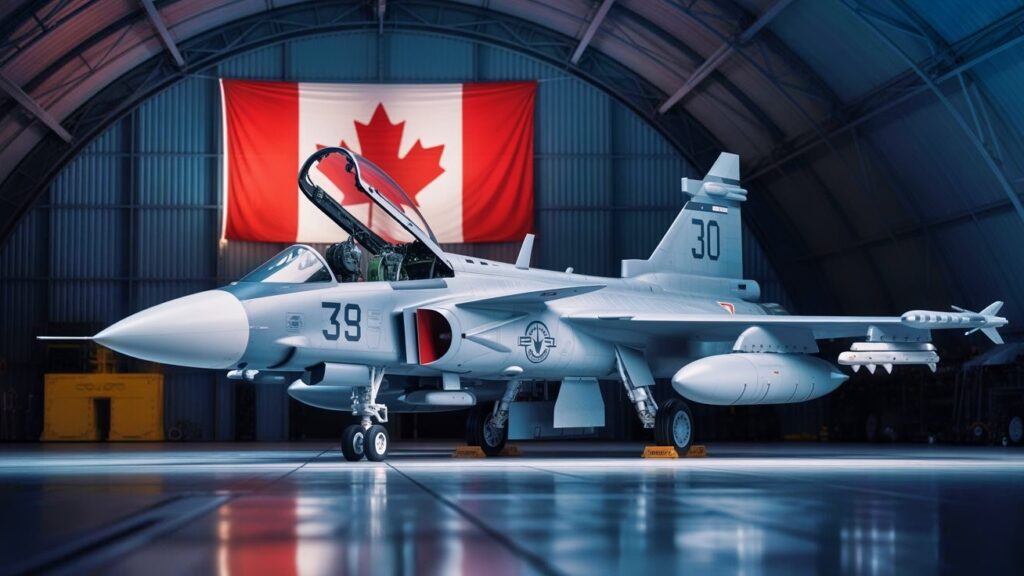
What began as an inquiry into the staggering costs associated with the F-35—initially budgeted at $9 billion and already ballooning to a staggering $17 billion—has transformed into a significant shift in Canada’s military strategy. Carney’s government is prioritizing domestic production and technological sovereignty, with the Swedish defense manufacturer Saab offering to manufacture Gripen E fighter jets right on Canadian soil. This move is not simply about replacing aging aircraft; it is a declarative statement of autonomy, suggesting that Canada is ready to break the chains of its military reliance on Washington.
The response from U.S. officials has been immediate and frantic. Alarm bells have sounded within the Pentagon, as senior defense insiders scrambled to remind Ottawa of the decade-old military partnerships and the supposed security it provided. Carney’s directed review has raised concerns that Canada’s decision might not only retaliate with costs in military financing; it may also greatly damage the seamless defense cooperation that has existed between the U.S. and Canada. The stakes are undeniably high, as the message from U.S. officials suggests that backing out of the F-35 could weaken NORAD’s joint readiness, provoking warnings of potential consequences.
Realizing the weight of momentum shift, lobbyists from Lockheed Martin have descended upon Ottawa, emphasizing the tens of thousands of jobs tied to the F-35 manufacturing program and the long-standing Canadian dependency on American repair systems. However, Carney appears unwavering, determined to investigate why the maintenance costs have spiraled to five times what was expected. The insistence on using U.S. training facilities rather than providing for Canadian pilots within their own borders has illuminated a growing resentment that dependency does not equate loyalty.
Then came the unexpected twist. In what some are calling a masterstroke, Saab’s proposal not only offers an alternative fighter jet but fundamentally challenges Canada’s role in the defense ecosystem. The Gripen E is designed not just for aerial superiority; it embodies a philosophy of independence. These aircraft would be tailored for Canadian needs, requiring local knowledge for support and sustainability, thus evoking a renewed spirit of national pride.

Carney’s review and Saab’s entry into the fray represent much more than fiscal prudence; they initiate a cultural revolution regarding Canada’s identity within global defense structures. With this maneuver, Canada proclaims it no longer wishes to be merely a customer in a relationship defined by American hegemony. Instead, the aspirations to cultivate domestic manufacturing and create jobs in Canadian cities can spur economic renewal that connects national security with local prosperity. As the landscape shifts, the stakes for the U.S. grow exponentially; if Canada successfully inches toward independence, it may ignite a domino effect among other nations questioning their own military subservience.
With tensions rising, analysts from Brussels to Tokyo are taking note. If Canada is capable of redefining the norms of military collaboration, could it prompt hesitant European nations, already grappling with growing defense costs, to explore their own paths away from dependency on the U.S. defense infrastructure? Meanwhile, discussions have already ignited regarding forming an independent European fighter consortium, which might emerge less tied to American influence.
The ripple effects of Canada’s bold choice will seemingly extend well beyond North American borders. Smaller nations, particularly, will be watching closely as they contend with the possibility of asserting their own defense strategies without deferring to the U.S. seismic shifts in attitude regarding defense partnerships are already being noted. Countries like Germany, Finland, and even France are reconsidering their own positions on American dependency after witnessing Canada assert its own interests.
Carney’s actions, portraying Canada’s courage and ambition, raises an inspiring question: what would it mean for lesser power nations globally to self-determine their defense needs and capabilities? As they metaphorically look to Canada standing defiant against one of the world’s largest arms dealers, the momentum builds toward a fundamental reevaluation of global influence.
Meanwhile, the political landscape is charged back in Washington. Strategic anxiety permeates as both defense executives and U.S. lawmakers voice concern that Canada’s retreat from the F-35 program could fracture NATO unity. Yet Carney’s resolve remains steadfast. The timeline for decisive action has galvanized the Canadian public, who polls show largely back the new direction, tired of a status quo that identifies loyalty purely through purchasing power.
The longer-term implications of this turn of events promise to drastically shift not only military cooperation standards but the very core of alliance politics. As Carney has made clear in this audacious move, Canada is not merely asking for better deals. It is signaling that it wants the negotiation framework to change; it is insisting that fidelity does not have to come with a price of autonomy.
As the world observes Canada’s potential conclusion of its partnership with Saab, it emerges as a powerful narrative illustrating how a seemingly minor procurement review is drifting into a larger conversation about sovereignty and identity. Whether or not Canada ends up with a fleet of Gripen jets instead of F-35s, the ongoing discussions will leave indelible marks on the global military landscape.
A decision that began as a fiscal inquiry is throwing a wrench into the gears of U.S. defense dominance. The F-35, heralded as a symbol of American supremacy, now represents an inflection point in global military politics. Canada’s move is more than a procurement strategy; it is a statement that resonates far beyond its borders and sets the stage for a redefinition of modern security paradigms.
In these critical times, how Canada navigates this fraught path will shape its identity and its relationships with both traditional allies and emerging players in international geopolitics. A new chapter is unfurling—emerging not from conflict but from a courageous decision to own its future, aspiring not for obedience but for a newfound sense of independence. The age of automatic American dominance is quietly but significantly transitioning into a new world order—one where power is rooted in enterprise and self-reliance. Mark Carney’s historic decision holds implications that could redefine global defense for years to come. This is Dollar Under Fire, exposing the critical and complex layers of change shaping our world.

Leave a Reply